

Key Takeaways
- The best powertrain depends on daily mileage, charging access, travel habits, and budget.
- Luxury EVs offer quiet performance and less routine engine service, but convenient charging matters.
- Hybrids improve efficiency without requiring drivers to plug in.
- Plug-in hybrids combine short electric trips with gasoline backup for longer travel.
- Gas vehicles remain useful for quick refueling, frequent towing, and high-mileage road trips.
Luxury-vehicle shoppers in 2026 have more choices than ever, from traditional gasoline models to hybrids, plug-in hybrids, and fully electric vehicles. Drivers who want to learn more about the available ownership paths should start by looking beyond performance figures and considering how a vehicle will fit into everyday life.
There is no single best answer for every household. A quiet EV may suit a commuter with overnight parking, while a hybrid or gas vehicle may be a better match for someone who drives long highway distances, tows equipment, or cannot reliably charge at home.
Why Powertrain Choice Matters More
Choosing a powertrain affects far more than how a vehicle accelerates. It can change where you refuel or recharge, how much time you spend on routine maintenance, what your energy costs look like, and how confidently you plan longer trips. Luxury buyers should compare each option based on convenience, comfort, capability, and total ownership cost rather than treating one technology as automatically superior.
Step 1: Build A Realistic Driving Profile
Before comparing trims, batteries, or fuel economy ratings, look at your actual routine. Estimate weekday mileage, typical weekend driving, the number of longer trips you take each year, passenger and cargo needs, towing requirements, local weather, and the terrain you regularly travel.
- How many miles do you drive on an average weekday?
- Do you have a garage, driveway, or workplace charging option?
- How often do you travel several hundred miles in one day?
- Will the vehicle carry children, luggage, pets, or business equipment?
- Do cold weather, steep grades, or heavy loads affect your usual routes?
A driver with a 30-mile daily commute and dependable overnight parking may find an EV especially easy to own. A driver who regularly travels between cities, makes unplanned long trips, or tows a trailer may place greater value on hybrid or gasoline flexibility.
Luxury EVs: Quiet Performance With Charging Convenience
All-electric vehicles use a battery pack and electric motors rather than a conventional engine. Their smooth acceleration, immediate torque, quiet cabins, and lack of oil changes can make them appealing in the luxury segment. The Department of Energy explains that driving range can change with temperature, speed, hills, cargo, and rapid acceleration, so buyers should plan around real conditions instead of relying only on a maximum rated range.
Questions To Ask Before Choosing An EV
- Can you charge at home most nights?
- Is a Level 2 charger practical for your electrical setup?
- Are compatible public chargers available on your regular routes?
- Does the expected range leave a comfortable buffer for your longest routine drive?
- Will winter weather or towing materially affect your charging schedule?
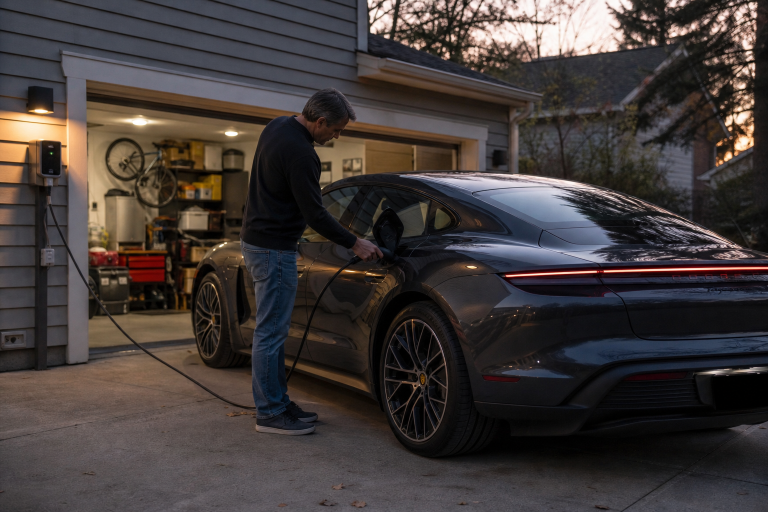
Home charging is often the biggest convenience advantage. Level 1 charging uses a standard household outlet and works best for slower replenishment. Level 2 charging uses a 240-volt service and is commonly the more practical overnight solution. DC fast charging can be useful on road trips, although charging speed depends on the vehicle, battery temperature, and the charger itself.
Traditional Hybrids: A Practical Middle Ground
A traditional hybrid combines a gasoline engine, electric motor, and battery that recharges through regenerative braking and the vehicle’s own power system. It does not need to be plugged in. This makes a hybrid a strong option for drivers who want better efficiency in traffic but prefer familiar gas-station refueling on every trip.
Hybrids can work especially well for stop-and-go commuting, mixed city and highway driving, regular road trips, and households without dedicated parking. The tradeoff is that the vehicle still has an engine and many associated service needs, even though fuel use may be lower than in a comparable gas-only vehicle.
Plug-In Hybrids: Electric Driving With A Gasoline Backup
A plug-in hybrid can drive a limited distance on battery power before relying more heavily on its gasoline engine. It may be a useful compromise for drivers whose daily trips are short but who also want easy long-distance travel without planning charging stops.
The value of a plug-in hybrid depends on charging habits. Owners who plug in consistently may complete many local trips using electricity. Owners who rarely charge may not receive the full efficiency benefit while still carrying the added weight and complexity of a larger battery system.
Gas Vehicles: Flexibility For Heavy Use And Long Travel
Gasoline vehicles remain a sensible choice for many luxury buyers. They offer fast refueling, broad station availability, familiar service networks, consistent highway range, and numerous options for towing or hauling. They can be particularly practical in areas with limited public charging or for drivers whose schedules leave little room for charging stops.
The main tradeoffs include fuel spending, oil changes, exhaust emissions, and more engine-related maintenance over time. Still, a gas vehicle can be the most convenient match when long-distance flexibility and heavy-duty capability are top priorities.
Compare Total Ownership Costs, Not Just Sticker Price
A fair comparison includes more than the purchase price or monthly payment. Review financing interest, insurance, fuel or electricity, home-charger installation, tires, registration, maintenance, expected resale value, and how long you expect to keep the vehicle. The Department of Energy’s consumer guidance for EV ownership also recommends evaluating driving needs, charging options, and operating costs before deciding.
Maintenance And Luxury Features To Compare
EVs generally avoid oil changes and many engine services, but they still need tire care, brake inspections, cabin filters, suspension attention, software updates, and cooling-system checks. Hybrids and plug-in hybrids require both electric-system care and many traditional engine services. Gas vehicles typically require the broadest range of routine engine maintenance.
Also, compare the features you will use every day: seat comfort, highway cabin noise, visibility, camera quality, driver-assistance settings, infotainment response, cargo access, rear-seat room, warranty coverage, and the ease of charging or fueling. Test every seating position and picture the vehicle in your normal routine before making a final decision.
A Simple Decision Guide
- Choose an EV if home charging is easy, daily driving is predictable, and quiet electric performance matters most.
- Choose a hybrid if you want stronger fuel economy without changing refueling habits.
- Choose a plug-in hybrid if most trips are short, but gasoline backup is important for regular road travel.
- Choose a gas vehicle if frequent towing, quick refueling, long-distance driving, or broad flexibility is the priority.
Final Recommendation: Match The Vehicle To The Routine
The right luxury vehicle is the one that makes daily driving easier, not the one that simply follows a trend. Consider your mileage, charging access, budget, travel plans, comfort expectations, and long-term ownership goals. With a realistic comparison, an EV, hybrid, plug-in hybrid, or gas vehicle can each be the right choice for the right driver.