

Key Takeaways
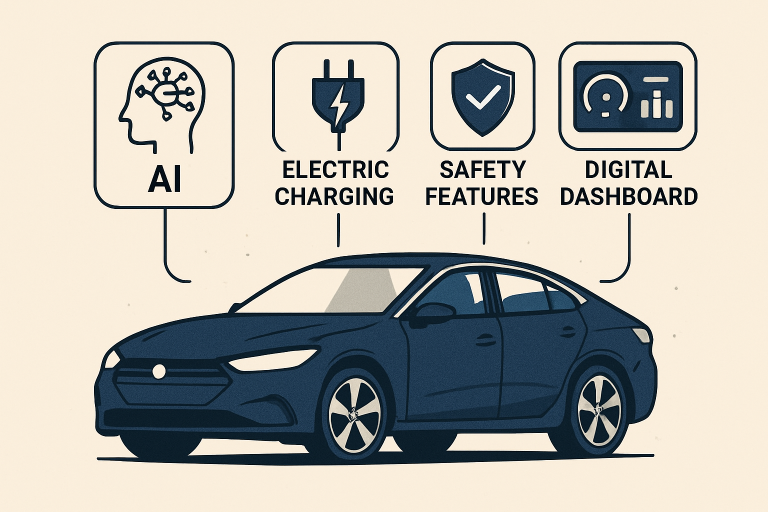
- Artificial intelligence is a central force driving innovation in vehicle design, manufacturing, and user experiences.
- The market share for electric vehicles is surging, particularly due to innovations from leading Chinese manufacturers.
- Advanced driver-assistance systems (ADAS) are setting higher standards for vehicle safety and autonomy.
- In-cabin AI is creating tailored, interactive driving environments for users.
- Companies like Applied Intuition and Sonatus are pioneering much of this technological evolution.
The automotive industry is undergoing rapid transformation as emerging technologies reshape how vehicles are designed, powered, and experienced. Innovations in artificial intelligence (AI), electric vehicles (EVs), and advanced digital interfaces are driving manufacturers to evolve and create more innovative, more efficient mobility solutions for drivers. Today’s modern cars feature intelligent systems that personalize performance, enhance safety, and support more sustainable transportation. As these advancements continue to redefine the future of driving, explore further insights and opportunities to learn more about how technology is revolutionizing the automotive landscape.
As companies race to adopt technology at scale, drivers’ experiences are rapidly evolving, giving them greater power and customization at their fingertips and transforming traditional automotive business models. Rapid growth in smart manufacturing, enhanced safety features, and more sustainable vehicles point to a promising future. Consumers and industry insiders alike are witnessing a technology-driven transformation that is far from finished.
Artificial Intelligence: The Driving Force Behind Modern Vehicles
AI’s influence in the automotive sector is broad, powering everything from early-stage vehicle design and testing to real-time driver assistance. Using sophisticated AI algorithms, automakers now simulate countless road, weather, and traffic scenarios, allowing engineers to identify design strengths and vulnerabilities before even building a prototype. In manufacturing, AI tracks component supply chains, predicts maintenance needs, and keeps assembly lines moving with minimal interruption. In the face of global supply chain disruptions, OEMs rely on AI tools to analyze supplier risks and anticipate part shortages, equipping companies to manage inventory efficiently and reduce costly downtime or reactive business decisions. These continuous improvements and intelligent analytics set the stage for future-ready vehicles and production methods.
Electric Vehicles: Accelerating Towards a Greener Future
EVs are emerging as the cornerstone of sustainable transportation, marked by record-breaking sales and accelerated adoption worldwide. In the United States alone, hybrids and EVs captured about 20% of the vehicle market in 2024. This trend is led by consumer demand for cleaner transportation options and stricter environmental regulations. The pace of adoption is even faster in China, where companies such as NIO and BYD are pushing the boundaries with innovative battery technologies, rapid charging solutions, and AI-powered driving systems. Notably, BYD recently surpassed Tesla in EV sales, highlighting the country’s influence on global automotive trends. China now accounts for two-thirds of global EV sales and nearly a third of all passenger-car exports, underscoring its pivotal role in the industry’s future.
Advanced Driver-Assistance Systems: Enhancing Safety and Autonomy
Driver safety and automation are taking center stage with the integration of ADAS, which includes features like lane-keeping assistance, emergency braking, and adaptive cruise control. The global ADAS market is projected to soar from $72.7 billion in 2025 to $260.5 billion by 2035, underscoring both the demand for safer vehicles and the value of AI-driven solutions. These systems rely on sophisticated data analytics and real-time environmental monitoring, helping vehicles interpret their surroundings and make safety-critical decisions. This evolution is laying the groundwork for the future of fully autonomous cars, with each incremental advance bringing us one step closer to hands-free driving and virtually crash-free roads. For more insights on the growing relevance of ADAS and related technologies, this CNBC article provides further detail on industry leader deployment strategies.
In-Cabin AI: Personalizing the Driving Experience
Today’s drivers are enjoying the benefits of personalized, intelligent in-cabin technologies that adapt to their preferences and needs. Through onboard AI systems, vehicles can recognize individual drivers, adjust climate settings, and provide context-based recommendations, such as suggesting nearby restaurants or fuel stations, or making real-time route adjustments to save energy or avoid traffic. New features include immersive dashboards, customizable lighting, and even sound engineering to combat motion sickness and stress. Holographic displays and voice-activated controls promise a seamless, intuitive environment that transforms every journey into a unique, engaging experience.
Industry Leaders Pioneering Change
Several companies have distinguished themselves with bold innovation in this space. Applied Intuition stands out for its tools designed to accelerate the development, testing, and deployment of autonomous and semi-autonomous vehicle systems. The company’s simulation platforms empower automakers to safely test software-controlled systems before real-world rollout, impacting sectors far beyond consumer vehicles, including trucking, defense, agriculture, and construction.
Sonatus, on the other hand, focuses on enabling the next generation of software-defined vehicles. Their technology allows automakers to add or upgrade vehicle capabilities and tailor the in-cabin experience through software updates, providing unmatched flexibility and sustainability.
Challenges and Opportunities Ahead
With so much promise, the auto industry must also contend with significant challenges. Data privacy and cybersecurity remain top concerns as vehicles become more connected and dependent on software. Substantial investments are needed to upgrade infrastructure supporting electric charging stations, network connectivity, and advanced vehicle servicing. However, the opportunities for growth, efficiency, and personalization far outweigh the challenges. Manufacturers and technology vendors are well positioned to create safer, more reliable, and more enjoyable transportation modes for both today’s drivers and the next generation.
Conclusion
The marriage of AI, electrification, and in-cabin digital experiences is not only reshaping automaking but also redefining mobility as a whole. As these innovations mature, they deliver safer roads, cleaner vehicles, and a more customized driving world. The automotive evolution is just getting started, and the results will be profound for everyone on the road.